
Vision Sunday - Part 1: Who We Are
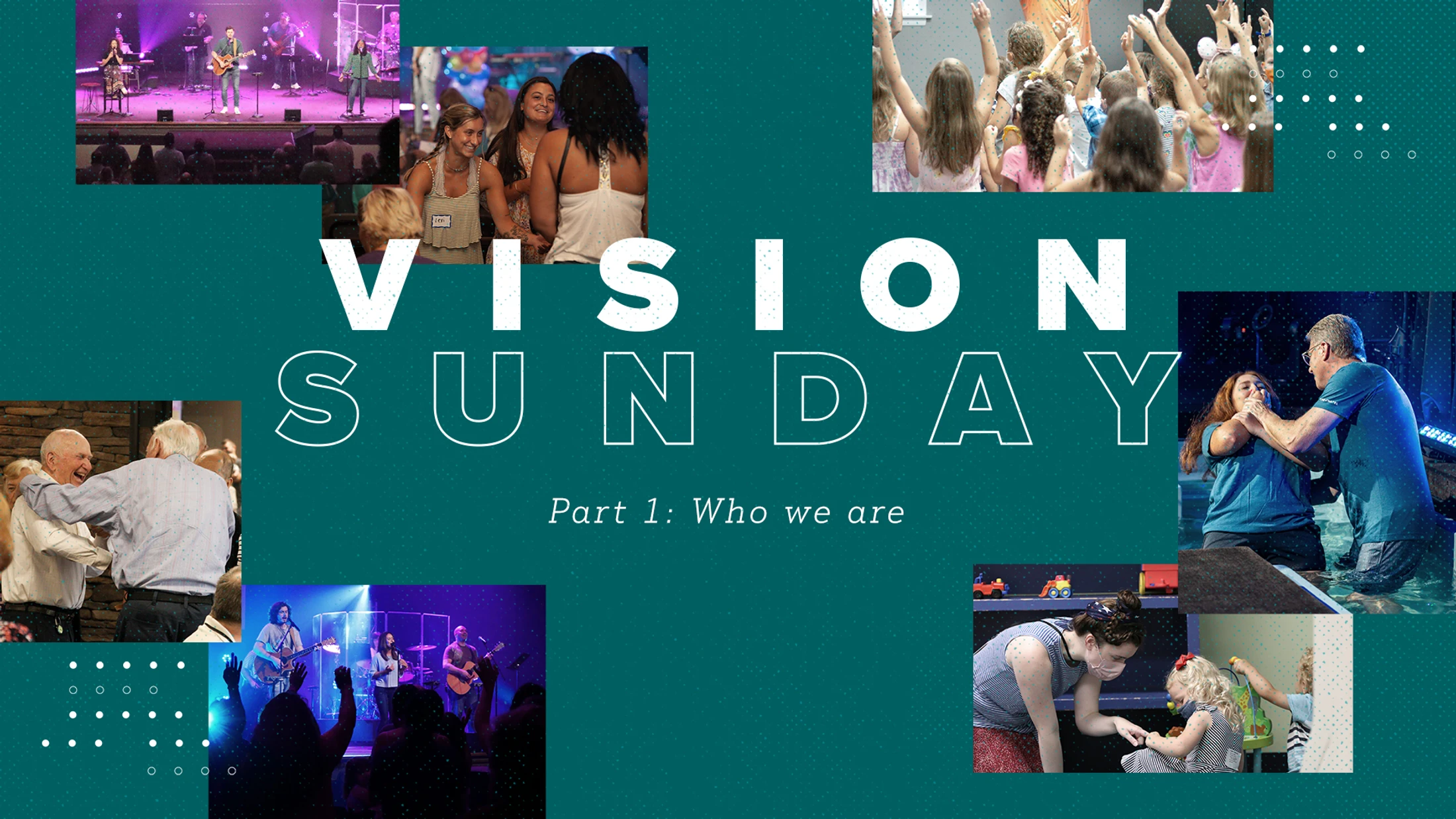
Good morning Chapel family! Great to be with you today, whether you’re joining us in person or through our online campus. For those of you who’ve been away from church for a while…welcome home. It’s been a long, strange year and a half, and it’s so good to re-gather as a family this morning. My name is Dave Gustavsen, and I serve as part of a really amazing team of pastors and elders and ministry leaders here at The Chapel. And for the next two weeks I have the privilege of sharing with you the vision of where we believe God is leading us in this new season.
I’m going to get real personal real quick today. This fall marks 25 years for me as a pastor at The Chapel. That’s pretty scary, isn’t it? (I was 12 when I came on staff, so you can do the math). 25 years! And I need you to hear this: I love my job. I love this church, and I love almost everything about my job. At the same time, there has never been a year as hard and as painful for me as this last year. Not even close. I don’t say that to gain your sympathy. I know it’s been a rough year for a lot of you. But I just want to share my experience, because I think it points to something that our world desperately needs, and something that we, as a church, can provide.
For me, the hardest thing has been seeing the way people have been treating each other. There is so much anger and emotion, over everything: masks, vaccines, Afghanistan, climate change, immigration, the list goes on. And people have always disagreed on things. But it’s different now. Because now, if you’re not on my side, that means you’re stupid, or you’re brainwashed, or maybe even evil, and I don’t want anything to do with you. And I don’t need to tell you: that anger and suspicion and division runs through friendships; it divides families; it even finds its way into churches. That’s why it’s been a painful year for me. I’ve lost a lot of sleep. I’ve agonized over decisions. I’ve officiated lots of funerals. It’s been a tough year. And maybe just as tough for you.
But here’s the thing—and this is what got me out of bed this morning—this is why I have incredible hope—I truly believe that God has placed his church in the world to bring healing into this mess. More specifically: I believe God has placed The Chapel in northern New Jersey to bring healing to the mess right around here. I see that healing happening, and I think God wants to use us to bring more of it. Not because we’re so wonderful, but because the message we carry is big enough and powerful enough to rise above all those other differences. It really is that powerful. He really is that powerful. So that’s what I want to talk about these next two weeks.
I truly love our mission statement—here it is: Building a family of Christ-followers who love God, love people, and serve the world. That’s what The Chapel is all about: building a family of Christ-followers who love God, love people, and serve the world. So I’m going to break this down in a really simple way: today, we’re going to talk about Who We are: we are a family of Christ-followers. Next week, we’re going to talk about What We Do: we love God, love people, and serve the world. Alright? Today—who we are; next week—what we do.
So…who are we? We are a family of Christ-followers. So let me ask a huge question…what is it that makes a family? Same address? Same personalities? Same political views? Not necessarily, right? So what really makes a family? Here’s what I’d say: More than anything else, families love one another.
When Jesus walked this earth he gathered a group of really unlikely people together, and he taught them what it meant to truly be a family. One of the most memorable things he said is found in John
13, verses 34 and 35—listen to this: 34 “A new command I give you: Love one another. As I have loved you, so you must love one another. 35 By this everyone will know that you are my disciples, if you love one another.”
So as we begin to think about who we are as a church in a very divided culture, let’s unpack that passage. And my hope is that this doesn’t just give you a vision for our church; I want to give you a vision for how we can be sources of healing in all our relationships. Let’s talk about What Love Is, Where Love Comes From, and Why Love Matters. And then we’ll close with communion today. What love is, where it comes from, and why it matters.
So, first: What Love Is. In verse 34, Jesus says: “A new command I give you: Love one another.” So I’m going to state the obvious: the call to love is a command. And that has a huge implication: according to Jesus, love is not a feeling. If you don’t hear anything else I say in this sermon—if you fall asleep and you don’t wake up until it’s over—just remember that one thing: love is not a feeling. Love sometimes includes feelings, but love is not a feeling. At least not the kind of love the Bible’s talking about. Because you can’t command a feeling, right?
Let me propose a definition of what love is, according to Jesus. Here it is: Love is the loyal, sacrificial pursuit of another person’s well-being. Got that? Love is the loyal, sacrificial pursuit of another person’s well-being.
So if that’s true, then it’s possible to truly love someone even if you don’t have warm feelings for them. Right? I knew a woman whose father was awful to her when she was growing up. He was harsh; he was cold; never once did she hear him say the words, “I love you.” And obviously that damaged her; she had to work through forgiveness, which—with God’s help—she did. So I knew her when she was in her 50s and her dad was in her 80s; his wife was gone and his health was failing. And this woman would go to her dad’s house every day, and take care of him and feed him. Why would she do that? Because she had such warm feelings for him? Because they reminisced about wonderful memories they had together? No. Because it was her dad, and she chose to pursue his well-being. That’s love.
So it’s possible to love someone even if you don’t have warm feelings for them. There are probably some people at your job, or your school, or who live on your street, or even in our church that you have some real differences with. Let’s be honest: you don’t really like them. But I need to tell you today: it’s possible to love them. In some ways, that’s the most impressive kind of love.
And here’s a great thing: sometimes, when we don’t have warm feelings toward someone, but we choose to love them anyway, the warm feelings follow. Have you ever experienced that? Like, that woman I told you about—who had the mean father?—she committed herself to loving him in his final months of life. And as she did that, she was surprised to find in her heart a warmth and compassion for him that was never there before. Feelings make much better followers than leaders.
Now: I know what some of you are thinking. Because you have a really hard marriage, or a bratty kid, or some annoying church member in your life. And you’ve tried this. You’ve tried to love them and do right for them no matter how you feel. And it seems impossible. Which leads to the second point:
Where Love Comes From. Look at verse 34 again: A new command I give you: Love one another. As I have loved you, so you must love one another. In a sense, that wasn’t a new command at all. Leviticus 19:18 says, “Love your neighbor as yourself.” That was a very old command. But here’s the new part: as I have loved you, so you must love one another. The reason it was a new command was
that now, Jesus himself was the standard. Our mission statement doesn’t just say we’re a “family”; it says we’re “a family of Christ-followers.” That raises this to a whole new level.
So here’s the deal: in order for us to love the people in our lives (and by the way, do you notice that we’re not playing the victim here? We’re not saying, “How come people don’t love me more? How can I get people to show more love for me?” Let God worry about that. Our calling is to be the ones who take the initiative, and pursue the well-being of others). So in order for us to love the people that God has put in our lives, it has to come from Jesus. And that’s true in two senses:
First, Jesus our Example. All of us grew up watching examples of how to treat people. Right? Like: how do you respond when someone eats the ice cream you were saving for yourself? Is there a blowup? Is there the silent treatment? Is there a fistfight? Is there a silent plotting of revenge? Or, when people in the house are together, how much do they actually talk, versus everyone being on their screens? All that stuff. In our culture now, we see all kinds of scary examples of labeling and canceling and shaming. It’s a mess! But the point is, we cannot help but be influenced by those examples. So here’s what Jesus is saying: look beyond all the imperfect examples, and watch the way I treated people, and make that your example. So when I look at the example of how Jesus loved, three things stand out:
First, loyalty. The love command of Jesus is actually sandwiched between two examples of disloyalty. Right before it, Jesus predicts that one of the disciples is going to betray him—turn him in to the authorities. And right after it, Jesus predicts that Peter is going to deny knowing him. So Jesus is basically saying, “You are surrounded by really bad examples of loyalty. So don’t look to them; look at me. Watch the way I love people and stick with people and don’t give up on people.” Loyalty.
Think about your relationships for a minute. Have you given up on somebody too easily? Or is there a pattern in your life of serial relationships—where you never have the same friends for long? Do your kids know that no matter what they ever do, you’ll always be there for them? What would it mean for you to be more loyal in the way you love people?
Also, Jesus is the example of sacrifice. When Jesus says to them, “Love one another the way I’ve loved you,” what had he just finished doing? Washing their feet. Which, by the way, in that culture, foot washing was a normal thing to do. The roads were dusty, everyone wore sandals; so when you showed up at someone’s home, it was common to have your feet washed. (I personally believe we should bring back this custom). So the owner of the home would call the servant—the person with the lowest rank in the home—to wash the guests’ feet. So the reason this was so shocking is that Jesus—the highest ranking person in the room—acted like a servant. And he even did it for the one he knew would betray him, and the one he knew would deny him. He sacrificed his comfort and his status and reputation; and the next day he would sacrifice much more than that when he went to the cross. And then he said, “Love each other like that. That’s your example.” Real love is sacrificial.
There was recently an article in USA Today, talking about hurricane relief efforts. We hear a lot about FEMA, right?—the Federal Emergency Management Agency. But in the article it said about 80% of recovery happens because of non-profit organizations, and the majority of the non-profits are faith-based, mostly Christian. So these are people who give up their time, and donate money, and sleep in strange places, and get dirty, and do lots of physical labor—in other words, they sacrifice, a lot. What a beautiful example of love.
When your wife had a hard day at work; when your son needs help studying; when someone in your small group just had a miscarriage, what does loving that person mean? It means sacrificing your time, your convenience, what you’d rather do at the moment; it means sacrificing your comfort zone,
because you feel a little awkward and unsure of what to say. I really like comfort and control…and God is teaching me to sacrifice those things for the sake of love—just like Jesus did for me.
And then third, Jesus is the example of pursuit. Did you know that in the first century, the typical way for a Rabbi to gain disciples was to wait for someone to follow him, or wait for someone to come up to him, and then they would consider taking that person on as a disciple. You know how Jesus did it? He completely reversed that pattern. He took the initiative. He went up to people and said, what? “Follow me.” Totally different approach! In other words, Jesus pursued people.
In leadership development groups over the years, I’ve asked dozens of leaders this question: who is one person who has deeply influenced you—and why? And one of the top answers is: “It was this person who pursued me. They took the initiative to care about me and be interested in me. They invited me to things; they included me in things. And their pursuit made me believe I really counted.” What would it mean for you to become less passive and pursue the people God has put in your life?
See, love isn’t a feeling. It’s a loyal, sacrificial pursuit of another person’s well-being. And the greatest example of that in all of history was Jesus. BUT…as awesome as that is, that’s not enough. We need more than an example. We need power to pull this off. So thankfully, Jesus is not only our example…
Let’s talk about Jesus Our Empowerment. Two chapters after this, in John 15, Jesus said something very similar. Look at John 15, verses 12 and 13: 12 My command is this: Love each other as I have loved you. 13 Greater love has no one than this: to lay down one’s life for one’s friends. Same basic command, right? Love each other the same way I’ve loved you. But in this context—in chapter 15—Jesus doesn’t emphasize his example; he emphasizes his empowerment of us. Look at John 15:5…I am the vine; you are the branches. If you remain in me and I in you, you will bear much fruit; apart from me you can do nothing. Picture a thick, healthy vine, with little branches growing off it, and then grapes grow on the ends of those branches. You got the picture? So in this analogy, you and I are the branches, and the grapes symbolize love—treating the people around you with loyal, sacrificial pursuit of their well-being. The grapes are love. So here’s the point: a branch does not produce grapes by trying really hard to produce grapes. Like, “Man, I’m just going to focus and concentrate and pop out another grape.” It doesn’t work that way. (Sounds kind of weird actually). So how does a branch produce grapes? Very simple: By staying connected to the vine. That’s where the life comes from; that’s where the sap and the moisture come from. And the vine is Jesus.
See, we can try as hard as we want, but the kind of love Jesus is talking about is supernatural. We have to learn to stay connected with him. To remain in him. That comes through prayer, and meditating on Scripture, and consciously practicing his presence throughout our day. And then, when you see that difficult person coming, you can avoid eye contact, OR you can root yourself in Christ—say, “Lord, flow your love through me to this person.” And then you walk right up to them, and treat them with powerful kindness. Let Jesus be your example and your empowerment.
You know why this is all so important? Let’s talk about Why Love Matters. Two reasons. First, It matters to the world. Back to our main passage in John 13; look what Jesus says immediately after he gives the love command—John 13:35… By this everyone will know that you are my disciples, if you love one another. How do people know you’re wearing Nike? Because you have the famous Nike “swoosh” on your sneakers. You can’t miss it, right? How do people know you have an iPhone? Because you just paid $1,200 for your phone. No—because you have the iconic apple with a bite taken out of it. How do people know that someone is a disciple of Jesus? According to Jesus, it’s by seeing how much we love. That’s sort of God’s “brand identity.” Wow.
Can I ask a tough question? Do you think that in the United States, in 2021, Christians are known for their love of one another? That’s a big question, right? I’m thinking we’d get pretty mixed reviews on the whole love thing. When spiritually searching people see Christians bickering over politics and vaccines and masks and whatever else, how do we appear? Just like the rest of the world! But when they see us holding our differences with humility and grace, and focusing on what we have in common as Christ-followers, that’s powerful. It shows people there’s something real going on here. This year, as a church family, let’s choose to be different from the world in the way we hold our differences.
But more importantly, It matters to God. In the book of Romans, there’s a section where Paul is telling the Christians in Rome that they’re not acting like a family. They had strong disagreements about things like whether you should drink wine or celebrate certain holidays. In other words, they were disagreeing on non-essential issues—things that were important, but not nearly as important as the gospel. Things like politics and vaccines and masks. It’s fine to have an opinion on all that stuff, but it should never separate families. So Paul basically says, “Look, there’s one Judge, and it’s not you! So hold your opinions humbly, show extra grace to each other, and let God be the judge.” And here’s how he wraps up that section—in Romans 15:6 he says you should accept each other so that with one mind and one voice you may glorify the God and Father of our Lord Jesus Christ. In other words: when we act like a family, it glorifies God. It actually brings joy to God’s heart.
I am the father of four kids, and I have a confession to make: our kids haven’t always gotten along perfectly. I know you’re shocked. But it’s the truth—sometimes they bicker and annoy each other, or just avoid each other. And I remember a moment a few years ago—two of my kids had been kind of at each other, lots of tension between them. And the three of us were out on bikes, and we were kind of single file. But I remember looking up ahead, and seeing these two kids, who had been fighting, biking side by side—talking to each other, and laughing with each other. And it’s hard for me to describe the effect that had on me as a father. And they were probably talking about me, and laughing at me! But that didn’t matter. Because my kids were getting along. And that melted my heart.
Listen: God loves when his kids get along. God loves when his kids get along. It glorifies him and it brings him joy. Guys, that’s why this matters so much.
Larry Crabb, author, wrote about a man he had counseled. This man had grown up in a very angry home. He said mealtimes were either totally silent or they were sarcastically cutting—people criticizing each other or complaining about something. So, starting when he was about ten years old, this guy would try to eat as fast as possible, and he would excuse himself from the dinner table, and he would go down the street to the house where one of his friends lived. The house had a big, wraparound front porch, and he would crawl under the porch of that house and sit there; and if they had the windows open he would be able to hear them talking, and laughing. And he would sit under the porch—sometimes for a long time—wishing he could be part of that family.
If I had to think of one word for what that boy was missing in his own family, and what drew him to sit under that porch, I think the word is love. And the world needs it now more than it ever has.
When I was in college, I was like that kid sitting under the porch of his friend’s house. Not because I came from an unhappy home; I didn’t. But my soul was hungry for something—I wasn’t really sure what it was. But I met a group of people, and I watched the way they talked to each other and treated each other—it was like I was sitting under the porch, listening to them at the dinner table. I heard respect, and I heard laughter, and I heard people who took life seriously. I heard a lot about Jesus. And something in my wanted to be part of that. I was a skeptic—I had a church background, but I had a lot of questions and a lot of intellectual barriers. And I got answers to some of my questions. But I’ll
be honest: ultimately, the reason I walked up those porch steps and took a seat at that table is because those people demonstrated love. And in their love I saw the love of Christ. And this year, as a church, we have an amazing opportunity to show that same kind of love.
Who are we? We are a family of Christ-followers. And more than anything else, families love one other. I’m not talking about a feeling! I’m talking about a loyal, sacrificial pursuit of one another’s well-being, that flows from the love we keep receiving from Christ. That’s love! And as we do that, the world takes notice and God is glorified. Amen?
Next week we’re going to talk about “What We Do”—and I’ll get into all kinds of details, and some really exciting new ministry developments. But this morning I wanted to lay this foundation of love—because without that, we’ve got nothing.
So as we close, let’s come to the communion table and fill ourselves with the love of Christ, so we can pour it out to others.